Category: Gluten-Free
Grain-Free Cauliflower Fried “Rice”


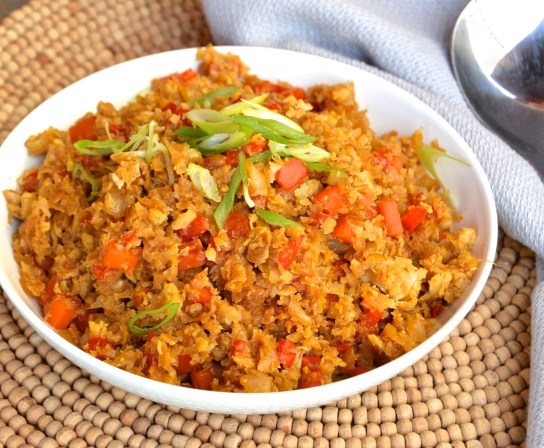
As I practice more and more with healthful, diet-restriction-friendly recipes (you know – vegan, gluten free, paleo, etc.), I find more and more ways to use cauliflower. From cauliflower “steaks” to cauliflower “rice,” the possibilities are seriously endless. A healthy, grain-free version of fried rice is one of my latest projects. Grated cauliflower, diced carrots, yellow onions and chopped red bell peppers make up the bulk of this dish. Then I add flavor with organic, cage-free eggs, a simple tamari-based sauce and a garnish of fresh scallions. For a genuine paleo/whole30 version, simply use coconut aminos instead of tamari. But for me, an organic soy-based tamari does the job perfectly.

When I think about it, many of the recipes I make are inspired by takeout and delivery classics, and this dish is the perfect example. Making your own “takeout” at home is much healthier than ordering out, and cheaper too. But for people who have dietary restrictions, it’s sometimes the only option to be able to enjoy favorite foods and cuisines. A grain-free/gluten-free lifestyle is the driving force behind this dish, but it also qualifies as vegetarian, dairy-free and, if using coconut aminos instead of tamari, paleo-friendly. Serve with a selection of proteins like grilled chicken, vegetables, tofu or steak, and you’ve got a meal that’s customizable enough (and delicious enough) to please a crowd.
Now, let’s go over a couple of my favorite health-supportive benefits of this recipe’s star, cauliflower.
Cauliflower is a cruciferous vegetable, and one of my all-time favorite vegetables, mostly because it’s super versatile. Cruciferous vegetables (like cauliflower, broccoli, turnips, kale and arugula) contain glucosinolates, a chemical that contains sulfur. When broken down during digestion, glucosinolates turn into compounds associated with anti-cancer effects. Cauliflower is also a great source of fiber, aiding in digestion, and also a great source of Vitamins K & C. Cauliflower is high in several powerful antioxidants, which are essential in providing adequate defense to your cells, which is believed to help your body in fighting off illnesses such as cancer.
Enjoy!

Grain-Free Cauliflower Fried “Rice”
Serves: 2 (main) or 4 (side dish) Start to Finish: 25 minutes
Ingredients
1 large carrot, peeled and diced
1 red bell pepper, seeded and diced
1/2 medium yellow onion, diced
2 cloves garlic, peeled and minced
2 tablespoons canola or coconut oil (organic preferred), divided
4 cups raw cauliflower rice*
1 teaspoon dried ginger
1.5 teaspoons sea salt, fine grain, divided
2 tablespoons tamari (use coconut aminos instead for paleo/whole30 version)
2 eggs (cage-free, organic preferred)
chopped scallions, garnish (1-2 scallions is enough)
To Make
Note: You may want to use a non-stick skillet or wok for this recipe. My stainless steel pan worked well for this recipe with no sticking/burning issues, but a non-stick skillet will be more fool-proof.
Prep carrots, peppers, onion and garlic. Using a box grater or food processor, grate large cauliflower florets into cauliflower “rice.” Use the stem portion of the florets too.
Crack eggs into a bowl and scramble with a fork. Set aside.
Heat 1.5 tablespoons oil in a large skillet over medium-high heat. Add carrots, peppers, onions, garlic and 1 teaspoon sea salt to pan. Cook for 5-6 minutes, until vegetables have softened and released liquid. Add grated cauliflower and ginger to pan. Cook for another 3-5 minutes, stirring frequently, until moisture from cauliflower is released and evaporated.
Add tamari (or coconut aminos) to pan, toss to coat, and cook for about 2 minutes, until excess moisture is removed. Push cauliflower aside and add remaining oil to open space in pan. Add scrambled eggs to oil. Frequently use a spoon to cut through liquified eggs in order to rotate uncooked eggs into the heat. Just as the egg solidifies (after about a minute), mix the cauliflower mixture into the eggs. Season with sea salt to taste (I added an additional 1/2 teaspoon) and cook for 1-2 minutes, until excess moisture is gone.
Garnish with scallions, serve immediately.
*1 head of caulifower is plenty for this recipe. You can also purchase pre-riced cauliflower in the freezer and/or produce section of many supermarkets.
Sources
Benefits of Cauliflower
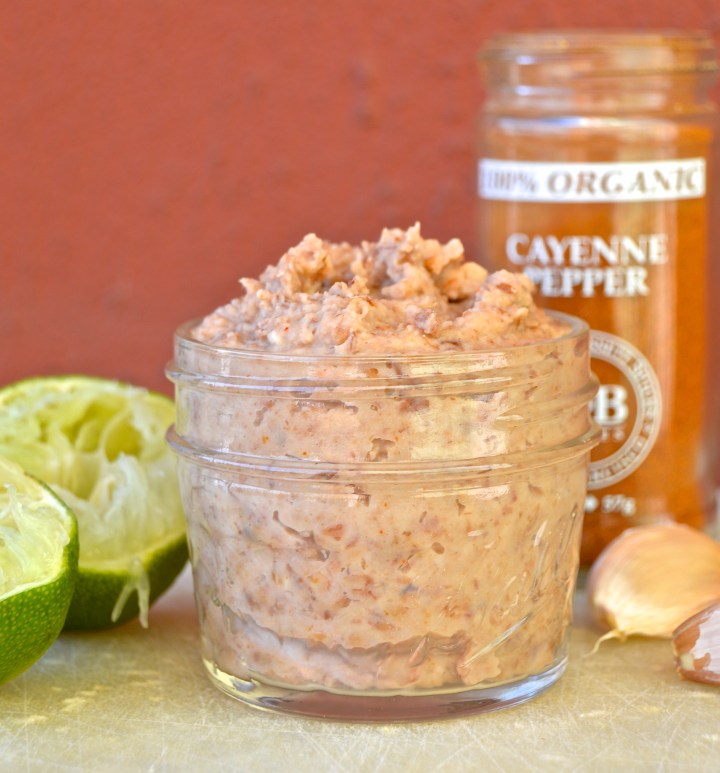
Best of Basic: 5-Min Zesty Bean Purée
Mediterranean Quinoa Salad with Super Green Tahini Sauce

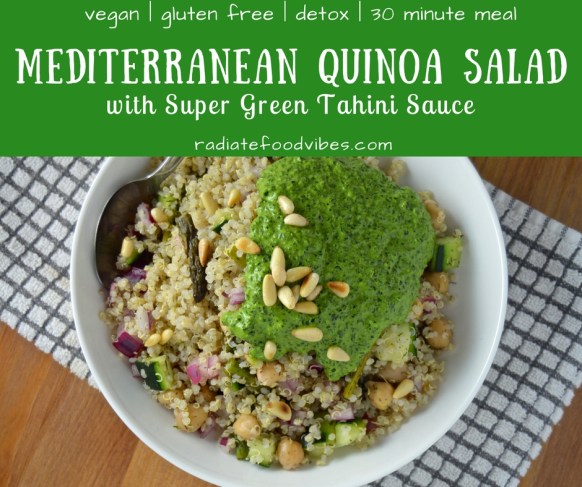
In my opinion, the best way to cleanse and detox the body is with plant-based (vegan) meals filled to the brim with fresh produce, whole grains, fiber and protein. This quinoa salad fits the bill, not to mention being outrageously delicious. The layers of flavors and textures in this salad will leave you feeling full, satisfied and energized. This salad is also mason jar friendly, making it a perfectly portable meal too!

My Mediterranean Quinoa Salad is packed with all things good and healthy. Protein-rich quinoa, fiber-filled chickpeas, quick pickled red onions, nutty asparagus and refreshing cucumber make up the bulk of the meal. The thick and creamy tahini sauce gets its bright green color from loads of kale and is flavored simply with garlic and lemon juice. This sauce is a flavor power house, but also also adds moisture and a nice creamy texture to the dish. Whenever I cook, I try to hit as many flavor and texture profiles as possible. That’s the secret to elevating healthy meals from blah to bravo!

Pretty much every single ingredient in this recipe is considered health supportive. Get to know some of them below before checking out the recipe. After all, understanding why something is healthy and beneficial is important to sustaining and loving a clean eating lifestyle.
Quinoa is an all-star in my mind because it’s one of a few grains considered to be a “complete protein.” This just means that quinoa (and other complete proteins) contains all nine essential amino acids. Amino acids are the building blocks of proteins. Essential amino acids (EAA) are those that the body cannot produce on its own, and therefor must be ingested. Vegetarians and vegans can get all nine EAA’s by combining grains and produce, or by eating complete protein sources like quinoa.
Chickpeas are one of my favorite legume varieties. They are very versatile and fit into a variety of different cuisines. Chickpeas are rich in protein, fiber and other nutrients such as manganese. Protein is important because it’s the building block of muscles and organs in the body (including the brain and liver), and allows for a physically strong and fit body. Protein is also essential for important bodily functions such as metabolism, fighting off infections, and the creation of enzymes and hormones. Additionally, protein is also needed for proper brain function and clear thinking.
Lacinato Kale, my fave variety of kale, is a true superfood. While many people eat it these days because it’s become oh so trendy, kale is a staple in my diet and for good reason. Along with containing fiber and protein, kale contains generous amounts many nutrients including vitamins A, C & K, calcium, potassium, iron, copper and manganese. But my number one reason to love kale is due to its inflammatory properties. Excessive inflammation has been linked to a multitude of illnesses including some types of cancer. A diet rich in anti-inflammatories, like kale, can potentially reduce the risk of developing these illnesses. Antioxidants in kale also aid in protecting against illness. Kale is particularly rich in two important antioxidants, carotenoids and flavonoids. Both of which are associated with fighting illness and certain types of cancer. That’s pretty powerful stuff, right?

Mediterranean Quinoa Salad with Super Green Tahini Sauce
Servings: 4 Start to Finish: 30 minutes
Ingredients
For Salad
1 cup dry quinoa (I used a white variety)
1 red onion
1/4 cup red wine vinegar
sea salt, fine grain
1 cucumber
1 can chickpeas, drained and rinsed (organic preferred)
1 bunch asparagus spears
1.5 teaspoons dried dill
For Super Green Tahini Sauce
1 bunch lacinato kale, woody stems discarded, leave roughly chopped
1 small clove garlic
1/2 cup tahini
3 tablespoons fresh lemon juice
2 tablespoons water
3/4 teaspoon sea salt, fine grain (plus more to taste)
1/2 teaspoon black pepper
Garnish
1/4 cup pine nuts, gently toasted (optional)
To Make
Cook quinoa according to package instructions. It should take about 20-25 minutes.
Meanwhile, chop red onion into a very small dice. Transfer to a small bowl. Add 1/4 cup red wine vinegar and 1/4 teaspoon sea salt. Allow to sit in fridge for about 15 minutes.
Peel the cucumber if desired. Cut in half length-wise. Scoop out seeds using a spoon. Chop cucumber into small-medium dice. Transfer to large mixing bowl. Add chickpeas to cucumbers.
Trim the ends of the asparagus spears. Cut each spear into 3-4 pieces. Set aside.
Make green tahini sauce. Add kale leaves to a food processor and process until broken down. Add all remaining sauce ingredients and process until smooth and creamy. Add more salt to taste (I added an extra 1/4 teaspoon).
When quinoa is finished cooking, remove from heat. Add asparagus to top of hot quinoa. Cover and steam for about 3 minutes. Transfer quinoa and asparagus to mixing bowl with cucumber and chickpeas. Add red onion and vinegar mixture. Add 1 teaspoons sea salt and dried dill. Stir to combine.
Serve quinoa with green tahini sauce. Garnish with pine nuts, if desired.

 Radiate Food Vibes